
Building the Piracy Intelligence System: Using Machine Learning to Detect Content Leaks at Scale
Content piracy is a detection problem before it's a legal problem. By the time a takedown notice goes out, the leak has already been re-uploaded three times under different filenames on different platforms. Our Piracy Intelligence System was built to compress that detection window from days to hours.
The problem with reactive anti-piracy tools
Most existing tools work off manual reporting or basic keyword/hash matching searching for exact title matches or known file hashes. That fails against the real piracy pattern: re-encoded video, cropped watermarks, retitled uploads, and mirror re-posts across dozens of platforms within hours of a leak.
Architecture: detection as a pipeline, not a single model
We built the system as a staged pipeline rather than one monolithic classifier, because each stage needs a different tradeoff between recall and precision:
1. Discovery layer
Automated crawlers monitor streaming platforms, torrent indexes, and social re-upload channels for content matching a client's catalog fingerprint. This stage optimizes for recall cast a wide net, tolerate false positives, because the next stage filters.
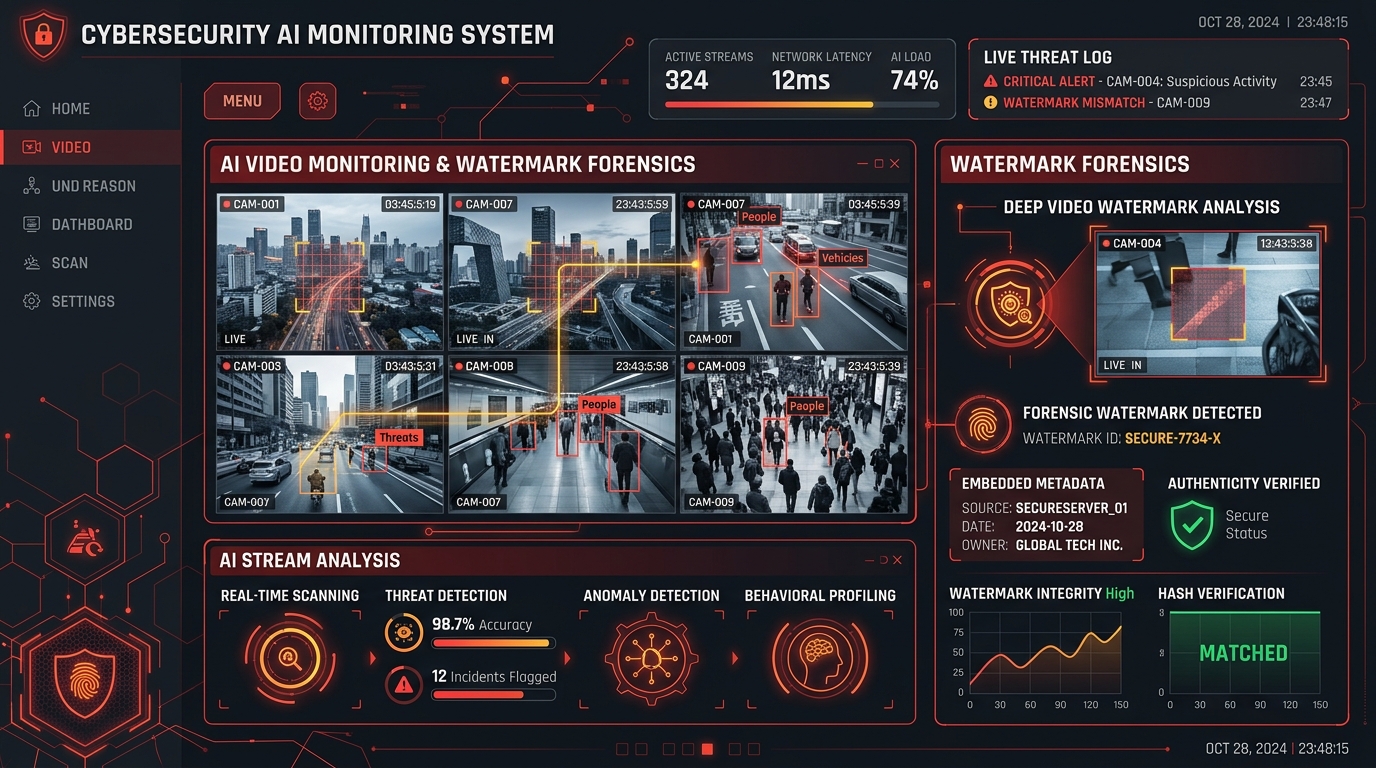
2. Pattern recognition & watermark analysis
Candidate matches go through a Python-based analysis layer combining perceptual hashing (to catch re-encodes and crops) with watermark detection (to trace the leak back to its distribution point which screener, which region, which reseller). This is where the 94% detection accuracy figure from our prototype testing comes from measured against a labeled set of known pirated re-uploads versus clean content.
3. Intelligence & reporting layer
Confirmed matches generate structured intelligence reports: platform, timestamp, estimated reach, watermark trace, and confidence score handed to rights holders' enforcement teams instead of a raw list of URLs.